

Three Practical Applications of AI-Driven ERP Systems
The integration of artificial intelligence (AI) with enterprise resource planning (ERP) systems represents a pivotal transformation in business management. AI-driven ERP systems automate operations, optimise workflows, and enhance commercial decision-making, enabling swifter responses to evolving market conditions.
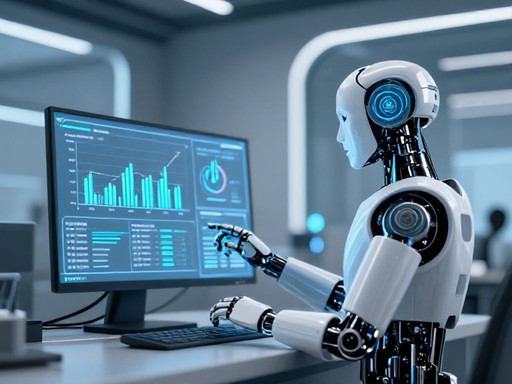
Traditional ERP systems primarily focus on corporate data management, such as inventory control, customer relationship management, and financial planning. While effective, they still involve significant manual intervention and require explicit instructions to achieve accurate outcomes and analysis. The advent of artificial intelligence addresses these limitations, ushering in the era of intelligent ERP systems. Indeed, AI has permeated daily business applications. Below are three practical scenarios illustrating how AI-driven ERP systems deliver greater value:
Interaction with ERP Systems without Technical background
AI's natural language processing (NLP) capabilities enable users to interact with ERP systems via voice or chat interfaces. Users require no technical knowledge to swiftly query data or perform high-accuracy analyses, even using vague or imprecise criteria.
For instance: Most users do not know precise field names or report filtering conditions – nor should they need to. AI enables them to ask questions naturally:
‘How much stock remains for Product X?’
‘Have we received goods from Supplier X?’
‘Has Customer X made payment?’
The AI bot automatically maps these queries to the correct ERP lookup or workflow without requiring precise input. This enhances accessibility for non-technical users and streamlines routine inquiries.
Handling Snowflake-Like Order Floods
High-frequency, low-volume orders pour in from diverse sales channels. Traditional ERP systems require manual order entry or integration to process this snowflake-like deluge. Current AI technology can recognise images, emails, messaging app conversations, and even handwritten text, automatically converting them into ERP system orders. Through continuous learning, AI recognition accuracy has reached a high level, eliminating repetitive data entry and processing while reducing errors. This allows teams to focus on high-value tasks.
Forecasting Demand to Optimise Inventory
AI can analyse historical sales data, market trends, and other factors to accurately forecast demand, optimising supply chains and inventory levels to avoid stockouts or overstocking. Additionally, it can automatically adjust safety stock levels based on supply chain risks (such as delivery delays or supplier stability) and demand fluctuations, thereby reducing inventory costs.
Beyond significantly enhancing daily operational efficiency, AI-driven ERP systems crucially provide actionable insights. This enables real-time, data-driven decision-making, ultimately boosting a company's market competitiveness.


